Plaza of Kanagawa Institute of Technology

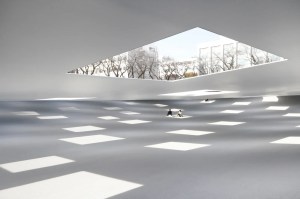


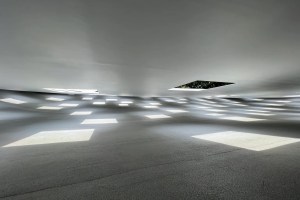
Building: Plaza of Kanagawa Institute of Technology
Location: Atsugi-shi, Kanagawa Prefecture, Japan
Address: 1030 Shimoogino, Atsugi, Kanagawa 243-0292, Japan
Owner: The Kanagawa Institute of Technology
General Contractor: Kajima Corporation
Design Architect: Junya Ishigami + Associates
Executive Architect & Sustainability Lead: Junya Ishigami + Associates
Structural Engineer: Jun Sato Structural Engineering
MEP Engineer: Takasago Thermal Engineering Company Limited
Civil Engineer: Jun Sato Structural Engineering
AE Interests: The roof is a single 12 mm steel plate supported only by four 250 mm exterior walls, reinforced by rib-like compression rings, and spanning roughly 90 meters above a floor that rises five meters from end to end. Its height ranges from 2.2 to 2.8 meters—similar to typical Japanese housing—and 59 rectangular roof openings bring daylight into the space.
Zaishui Art Museum
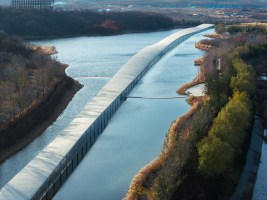
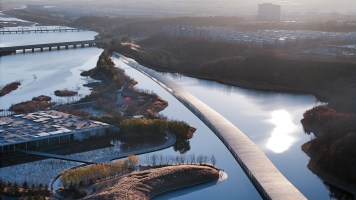
Building: Zaishui Art Museum
Location: Rizhao, China
Owner: Shandong Bailuwan
General Contractor: Beijing Yihuida Architectural Concrete Engineering Co.– responsible for reinforced concrete construction
Design Architect: Junya Ishigami+Associates
Executive Architect & Sustainability Lead: Junya Ishigami + Associates
Structural Engineer: XinY Structural Consultants
MEP Engineer: Environment-friendly solution to Building Services Engineering, Xueqin Yin
Civil Engineer: XinY Structural Consultants
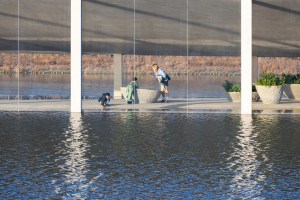
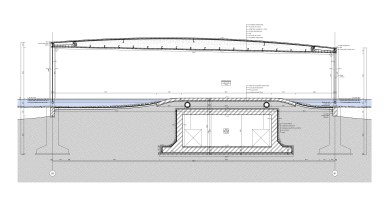
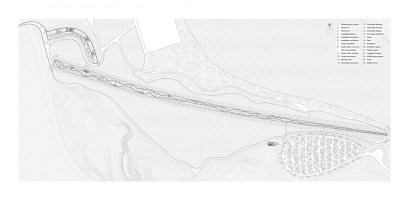
AE Interests: The museum’s design features submerged columns that support a floating, sash-like roof, forming a seamless boundary between the lake and land. Glass panels between the columns allow natural light, air, and even channel lake water into the structure, blending indoor and outdoor spaces. Varying ceiling heights and reflective surfaces create shifting patterns of light and water, emphasizing the museum’s connection to its lakeside setting.

 AEWORLDMAP.COM (3,300+ posts)

![[More]](https://aeworldmap.com/wp-content/uploads/2025/11/screenshot-2025-11-17-at-11.17.25-pm-2.png)
leave a comment